
No. Revenue leakage can occur across multiple business processes, including product configuration, usage capture, pricing, billing, payments, and finance. However, an enterprise monetization platform can significantly reduce leakage by automating pricing rules, enforcing contracts, validating usage, and providing end-to-end traceability.
Revenue Leakage Is Rarely One Big Problem
Revenue leakage usually happens in small ways, repeatedly.
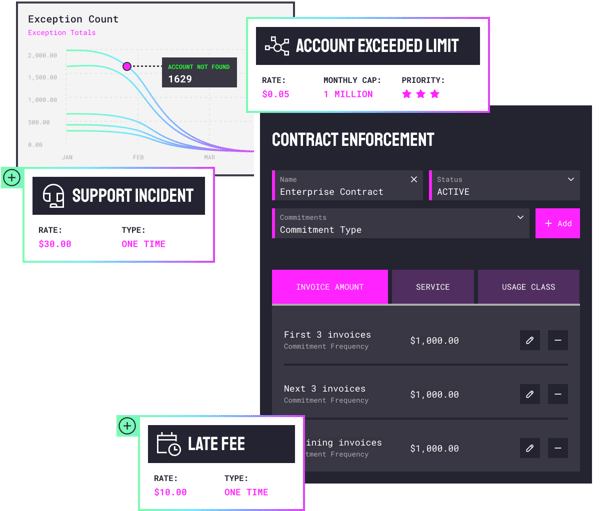
A missed usage event. A rating rule applied incorrectly. A contract exception handled manually. A proration error. A billing dispute that turns into credits and churn.
Individually, these issues look minor. At scale, they become material.
Common sources of leakage include:
-
Incomplete or inconsistent usage capture
-
Rating and pricing errors across products or customer segments
-
Contract terms not enforced consistently in billing
-
Manual exceptions and spreadsheet-based adjustments
-
Disconnected systems creating reconciliation gaps
-
Billing disputes that result in credits, write-offs, and delayed collection
Revenue leakage is not just a billing problem. It is a trust and control problem.
Why Revenue Leakage Increases as Pricing Evolves
Modern monetization models expand the risk surface.
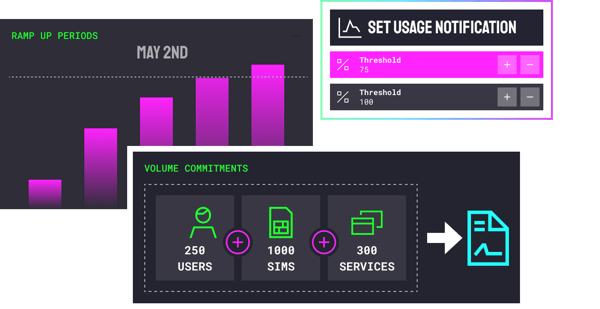
As businesses adopt subscription, usage-based, and hybrid pricing models, including tiers, commitments, bundles, and customer-specific agreements, the number of pricing rules grows rapidly.
If your billing foundation is fragile, every new pricing change introduces more opportunities for leakage:
-
Too many pricing combinations to manage manually
-
Exceptions that become permanent workarounds
-
Higher event volumes that strain rating and processing accuracy
-
Limited visibility into how charges are created or lost
-
Finance teams that cannot validate outcomes end-to-end
The more you innovate pricing, the harder it becomes to protect revenue without the right platform.
Where Revenue Leakage Happens
Revenue leakage occurs at specific points across the monetization lifecycle. Preventing it requires control at each stage. Reducing leakage requires control across the entire monetization lifecycle, from usage ingestion to billing, collection, and financial reporting.
Knowing how well our teams have leveraged LogiSense's services in other lines of business, it was an easy decision to quickly implement their billing system during this period of urgent demand.
Steven Fraser
Leader, Software Engineering, Cisco
Leader, Software Engineering, Cisco

What It Takes to Reduce Revenue Leakage at Scale
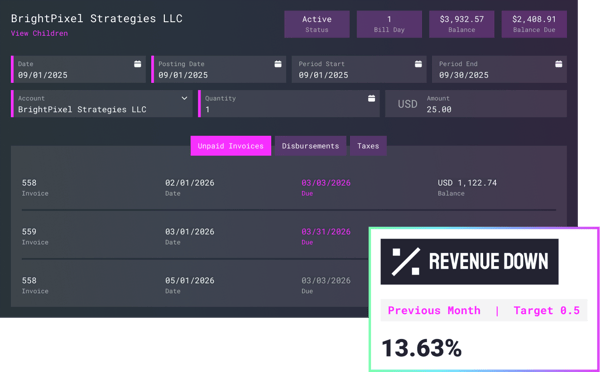
Reducing leakage requires more than monitoring after the fact. It requires control in the system that produces the charges.
Enterprise-grade revenue protection depends on:
-
Complete and accurate usage capture - Ensure all billable events are ingested, normalized, and mapped correctly to customers and services through mediation and data processing controls.
-
Accurate rating and pricing logic - Apply real-time and batch rating with support for complex pricing models such as tiers, time-based conditions, and geographic rules. Enable re-rating to correct pricing errors without revenue loss.
-
Contract enforcement across billing outcomes - Apply customer-specific agreements consistently across usage, subscription, and billing processes.
-
Product catalog governance - Maintain centralized control over products, pricing, and discounts to eliminate inconsistencies and prevent systemic leakage.
-
End-to-end traceability - Prove how each charge was created, from usage or subscription event through to invoice and financial reporting.
-
Exception management without manual chaos - Handle edge cases within controlled workflows rather than spreadsheets and manual overrides.
-
Payments and collections control - Automate payment processing and dunning workflows to reduce failed collections and prevent post-billing revenue loss.
-
Operational confidence at high volume - Maintain accuracy and control as usage volumes increase and monetization models become more complex across products and regions.
How LogiSense Helps Reduce Revenue Leakage
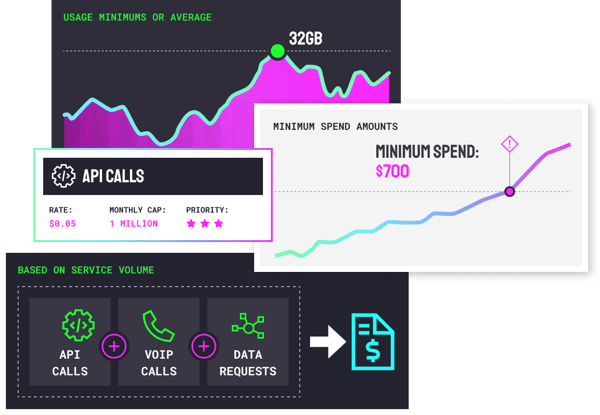
LogiSense helps enterprises protect revenue by building control and accuracy into the full monetization workflow.
-
Detect and prevent leakage at the source - Ensure usage capture, rating, and billing logic are applied correctly from the beginning, reducing downstream corrections.
-
Maintain accuracy across complex pricing models - Support subscription, usage-based, and hybrid pricing models with consistent application of pricing logic.
-
Control the full monetization lifecycle - Provide end-to-end visibility and control from usage ingestion and rating through billing, invoicing, payments, and financial reporting.
-
Reduce manual adjustments and disputes - Minimize invoice errors and inconsistencies that lead to disputes, credits, and delayed payments.
-
Align Finance, Product, and IT - Create shared confidence with finance-grade traceability and auditability across all monetization and billing outcomes.
Billing Without Compromising Control
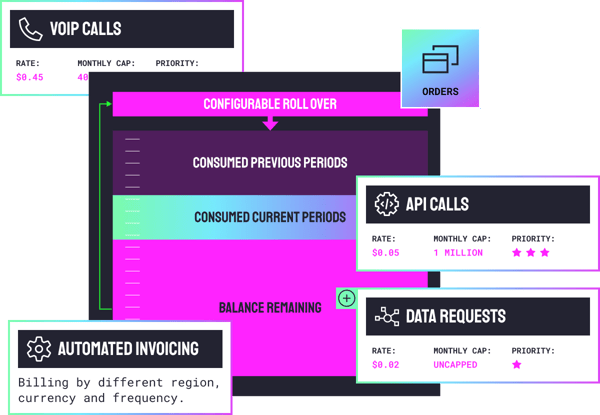
This is for organizations where:
-
Monetization depends on accurate usage capture and pricing execution
-
Billing operations rely on multiple systems and reconciliation processes
-
Pricing innovation is increasing operational complexity
-
Finance teams require confidence in billing and revenue outcomes
If your billing operation depends on workarounds, exceptions, or reconciliation across systems, leakage is already happening.
Revenue protection requires trust. Buyers want confidence that billing outcomes are accurate, consistent, and defensible.
LogiSense is built for enterprise environments where monetization and billing must scale without compromising control.
Trusted by leading companies








QUICK ANSWERS
Frequently asked questions
Can billing software eliminate revenue leakage completely?
How do I know if my business is experiencing revenue leakage?
Many organizations don't discover revenue leakage until it affects financial performance. Common warning signs include frequent billing disputes, manual invoice adjustments, spreadsheet-based reconciliations, pricing inconsistencies, delayed invoices, unexplained revenue variances, and heavy engineering involvement in billing changes.
Why does revenue leakage increase as pricing models become more complex?
Every new pricing model introduces additional rules that must be applied consistently. Usage-based pricing, subscriptions, hybrid models, tiers, commitments, discounts, and customer-specific agreements all increase the number of billing scenarios. Without automation, complexity often leads to pricing errors, missed charges, and inconsistent billing outcomes.
Which industries are most affected by revenue leakage?
Revenue leakage is particularly common in industries that depend on high transaction volumes or complex pricing, including communications service providers, SaaS, AI platforms, cloud services, IoT, managed services, utilities, and other usage-based businesses where every customer may have unique commercial terms.
How does usage mediation help reduce revenue leakage?
Usage mediation ensures that every billable event is collected, validated, normalized, and delivered accurately for rating. By identifying missing, duplicate, delayed, or invalid usage records before billing, mediation helps prevent lost revenue and improves confidence in invoice accuracy.
Can LogiSense support customer-specific contracts without creating billing errors?
Yes. LogiSense allows organizations to apply customer-specific pricing, discounts, commitments, allowances, and hybrid pricing models through configurable business rules rather than manual workarounds. This helps maintain consistency while reducing operational risk.
How does LogiSense help Finance audit billing accuracy?
LogiSense provides end-to-end traceability from usage events through mediation, rating, invoicing, payments, and financial reporting. Finance teams can understand how charges were calculated, investigate discrepancies, and demonstrate compliance without relying on manual reconciliation.
When should an organization evaluate a new monetization platform?
If pricing changes require engineering effort, Finance spends significant time reconciling invoices, billing disputes are increasing, or operational teams rely on spreadsheets and manual processes to support monetization, it may be time to evaluate whether the current billing platform is limiting growth.
A 30-minute conversation is enough to identify where your billing environment is holding revenue back.
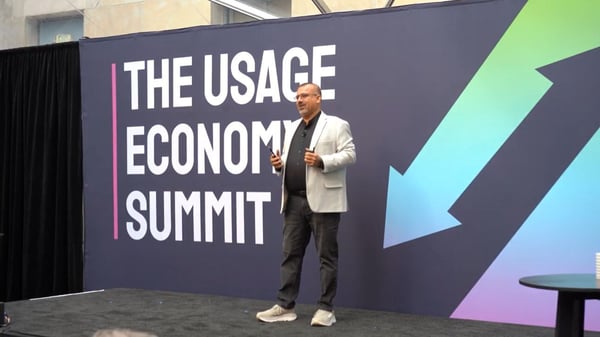
Usage Economy Summit
Uncovering revenue leakage in the usage economy
Ravin Checker, CEO of xfactrs, explores how revenue leakage impacts usage-based pricing models. Learn where revenue is commonly lost, why these issues are often overlooked, and how to strengthen revenue assurance with practical strategies to protect and grow your revenue.

Podcast
How to Quantify the True Cost of Revenue Leakage
In this exclusive podcast, Tim Neil, Sr. Director of Marketing at LogiSense, sits down with Ravin Checker, Founder & CEO of xfactrs, to uncover the true cost of revenue leakage.

Let's talk
A 30-minute conversation is enough to identify where your billing environment is holding revenue back.
- Find out where revenue is leaking and what it's costing you
- See how other operators have closed the gap without rebuilding their stack
- Understand what it would take to enforce every contract with confidence
- Get an honest assessment of whether LogiSense is the right fit