

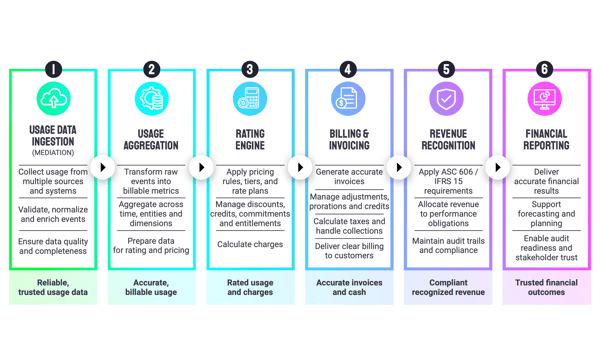
Operationalizing usage-based billing means building the processes, systems, and governance needed to deliver usage-based pricing reliably at scale. It extends beyond invoicing to include usage collection, rating, pricing, taxation, revenue recognition, reporting, and cross-functional collaboration. Organizations that operationalize billing effectively can introduce new pricing models faster while maintaining financial accuracy and operational control.
Executive framework
Operationalize usage-based pricing at scale, with confidence
The definitive guide to operationalizing usage-based pricing at scale. Practical frameworks for aligning pricing, billing, finance, revenue recognition, and tax across AI and usage-based business models.
With partner-contributed chapters from



Get the full guide instantly
See exactly where usage-based monetization breaks at scale, and the framework leading operators use to hold it together from the quote to the close.
What's inside the guide
The monetization system
Why pricing, billing, and finance have to work as one system, and what breaks when a single upstream layer fails.
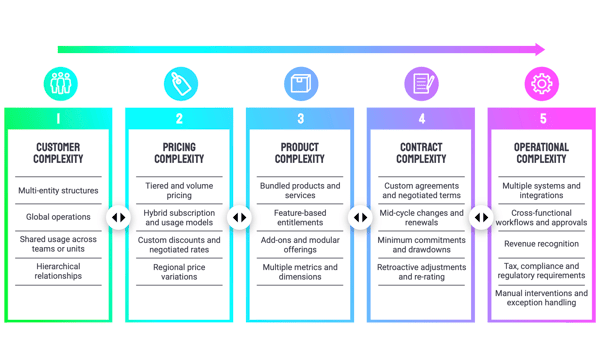
The hidden complexity framework
The five dimensions of complexity that compound as you scale, with a matrix to assess exactly where your organization sits.
The real cost of leakage
Why 3% leakage on a $100M book can erase roughly $21M in enterprise value, and how it stays invisible until it's too late.
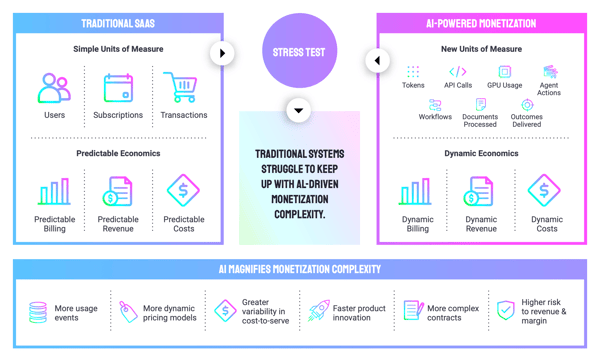
AI is stress-testing everything
How tokens, agents, and outcome-based pricing expose the weaknesses already sitting inside traditional billing and finance systems.
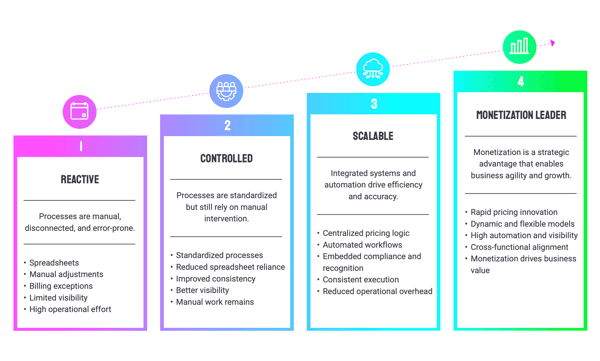
The maturity model
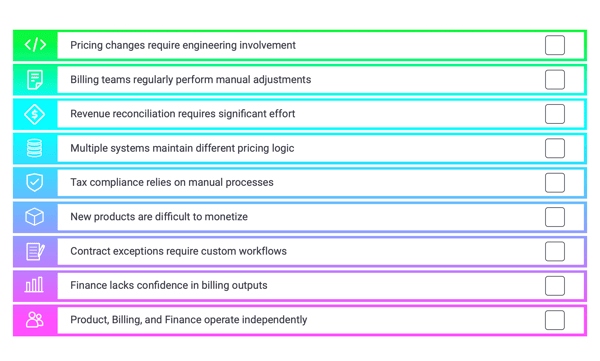
A nine-question self-assessment to find your stage, from reactive and manual to full monetization leader.
Partner-Contributed Chapters
Expert perspectives from across the monetization ecosystem.

Pricing, CPQ, and Cost-to-Serve
Monetization doesn't break at the invoice. It breaks at the quote. Govern the deal there, or pay for it downstream for the life of the contract.

Revenue Recognition
If finance can't trust the data, monetization fails. If finance can trust the data, monetization scales.

Tax and Compliance at Scale
Every transaction that generates revenue can create a tax obligation. In usage-based models, that complexity compounds fast.
See where your margin is exposed today.