
Outcome-based pricing requires businesses to connect charges to measurable customer results rather than consumption alone. This can introduce challenges involving performance measurement, contractual definitions, and determining how much value can be attributed to a particular service. Unlike usage-based pricing, where transactions or consumption can be directly measured, outcome-based monetization may require additional agreement between providers and customers about what constitutes a successful result.
podcast
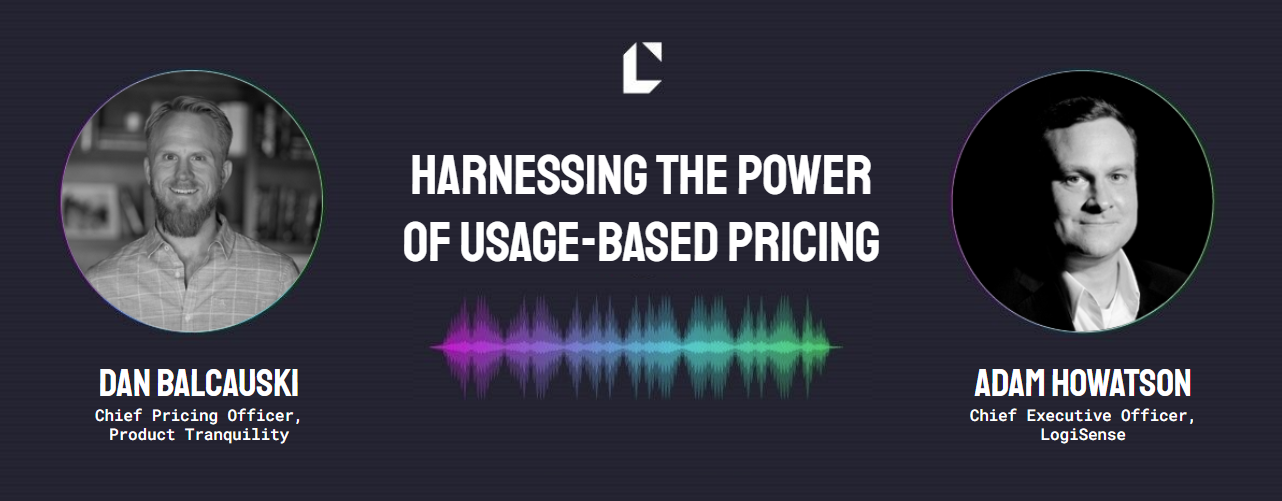
Harnessing the Power of Usage-based Pricing
Usage-Based Pricing Strategies for SaaS
Dan Balcauski speaks with Adam Howatson, CEO of LogiSense. They discuss Adam's extensive journey in software, from founding his first company in high school to leading LogiSense. The conversation delves into the complexities of usage-based and outcome-based monetization, which LogiSense specializes in, and how it aids major enterprises. Adam shares practical examples, the advantages of transitioning to such models, and the necessary organizational changes. They also explore how Gen AI impacts monetization strategies and offer advice for CEOs considering a move to usage-based pricing.
Key Topics Covered in This Podcast
- Usage-based pricing and revenue growth: How consumption-based models can help businesses align revenue with customer adoption and product utilization.
- Outcome-based monetization: How pricing based on measurable customer outcomes differs from conventional usage-based pricing.
- Revenue forecasting: The challenges of predicting revenue when consumption and customer demand fluctuate.
- Billing and monetization infrastructure: Considerations when evaluating whether to build or buy the technology required to support complex pricing models.
- Organizational transformation: Why transitioning to usage-based pricing requires coordination across Finance, Product, Sales, and IT.
- Generative AI and monetization: How AI-driven services introduce new questions around consumption metrics, pricing structures, and value capture.
Podcast originally published on SaaS Scaling Secrets by Dan Balcauski.
Interested in Usage based pricing?
Let us show you how LogiSense can upgrade your billing processes, improve revenue and empower your customers.
FAQ
What makes outcome-based pricing more complex than traditional usage-based pricing?
Why is transitioning to usage-based pricing an organizational challenge for SaaS companies?
Transitioning to usage-based pricing affects more than billing operations. Finance teams must adapt forecasting and revenue management processes, Product teams must define measurable consumption metrics, and Sales teams must communicate new commercial models. Successful adoption requires coordination across departments, supported by infrastructure capable of managing variable consumption and complex customer agreements.
What should CEOs consider when deciding whether to build or buy monetization infrastructure?
CEOs should evaluate the long-term costs, technical requirements, scalability, and operational responsibilities associated with each approach. Internally developed systems can provide customization but may require significant engineering resources to maintain complex rating, billing, and contract management capabilities. Commercial monetization solutions can reduce development requirements and allow internal teams to concentrate on product innovation.
How can SaaS companies manage customer and auditor expectations when introducing usage-based pricing?
Companies introducing usage-based pricing should establish transparent consumption measurement, accurate billing records, and clearly documented pricing agreements. Customers need visibility into how their charges are calculated, while auditors require reliable evidence supporting revenue calculations and recognition. Strong data governance and automated billing controls can help satisfy both requirements.