
Common challenges include outdated billing systems, fragmented customer data, manual invoicing, and a lack of coordination between business departments. Organizations must also adapt their pricing strategies, contract management processes, and financial reporting to support ongoing customer relationships rather than one-time transactions.
webinar
The Journey To Reliable Recurring Revenue
Subscription Models Are Evolving. Is Your Revenue Engine Ready?
In today's Subscription Economy, the gap between vision and execution is where growth often stalls.
In this episode of the Podcast, Ronald Haantjes, CRO at Synthesis Systems, walks us through The Journey to Reliable Recurring Revenue—and how the Synthesize Workshop helps B2B companies modernize their billing systems, untangle complexity, and build a roadmap that scales.
If your business is juggling legacy systems, siloed processes, or entering new markets, this conversation offers a proven, structured approach to transformation—one grounded in experience, clarity, and results.
What You'll Learn
- Overcoming recurring revenue challenges: Why legacy billing systems, manual processes, and disconnected data create obstacles when transitioning to subscription and usage-based business models.
- Aligning teams for successful transformation: How collaboration across finance, product, sales, marketing, and IT supports billing modernization and long-term growth.
- Modernizing subscription billing: Why consolidating fragmented billing environments can improve financial visibility, reporting accuracy, and operational efficiency.
- Identifying and preventing revenue leakage: How invoicing errors, missed renewals, unmanaged discounts, and contract inconsistencies can result in lost revenue.
- Measuring recurring revenue performance: Which financial and operational metrics, including MRR, NRR, churn, billing accuracy, and time to launch, help organizations evaluate success.
- Preparing for usage-based pricing and AI: How emerging consumption models and AI-driven services are changing the requirements for billing and monetization.
Continue learning
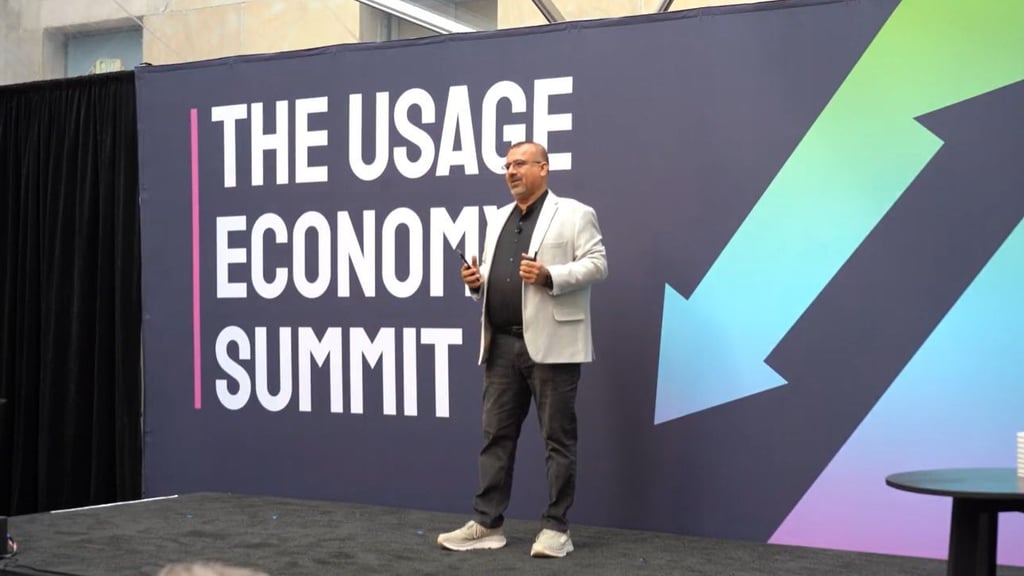
Usage Economy Summit
Uncovering revenue leakage in the usage economy
In this insightful session, Ravin Checker, CEO of xfactrs will explore the critical issue of revenue leakage within usage-based pricing models.
Speak with an Expert
Build a Scalable Foundation for Recurring Revenue
Speak with a LogiSense expert to explore how flexible billing can support your recurring revenue strategy.
FAQ
What are the biggest challenges when transitioning to a recurring revenue model?
How can businesses successfully transition to a recurring revenue model?
A successful transition starts with identifying which products or services are suitable for recurring charges and defining clear commercial objectives. Businesses should align their sales, finance, product, and operations teams, assess their existing billing infrastructure, and establish processes for managing subscriptions, renewals, and customer consumption. A phased approach allows organizations to introduce new revenue models without disrupting established operations.
Why is billing modernization important for recurring revenue growth?
Modern billing systems help organizations manage ongoing customer relationships, complex pricing agreements, recurring charges, and changes in consumption. As businesses expand their offerings or acquire other companies, disconnected billing environments can create reporting inconsistencies and operational inefficiencies. Modernization improves visibility into revenue performance while supporting faster product launches and more flexible monetization strategies.
Can businesses combine traditional sales with subscription and usage-based pricing?
Yes. Businesses can adopt hybrid monetization models that combine one-time purchases, recurring subscriptions, and consumption-based charges. Different products can follow different pricing structures depending on how customers receive value. This allows organizations to introduce recurring revenue streams gradually while maintaining established commercial models where appropriate.