

The True Cost of Revenue Leakage
Revenue leakage is an insidious issue that silently erodes profitability, often going unnoticed until it significantly impacts the bottom line. For enterprises operating in the Usage Economy, the challenge is even greater—complex monetization models, fragmented processes, and a lack of real-time revenue visibility create substantial financial blind spots.
Studies indicate that businesses lose between 4% to 20% of their revenue due to leakage, translating to a staggering $60B to $300B annually in lost revenue opportunities. Yet, many organizations fail to acknowledge the extent of the problem, operating under the false assumption that their existing systems and processes are airtight.
This article explores the root causes of revenue leakage, why enterprises unknowingly deny its existence, and the proven strategies CFOs and finance leaders can implement to eliminate leakage and reclaim lost revenue.
The Root Causes of Revenue Leakage
1. Disjointed Quote-to-Cash (Q2C) Systems & Processes
For many enterprises, revenue leakage starts at the very foundation—how they price, bill, and collect payments. The Quote-to-Cash (Q2C) process, which spans from sales quotes to revenue recognition, often involves a mix of legacy and modern systems that don’t seamlessly integrate.
Key Issues with Q2C Systems:
- Lack of automation: Manual processes increase the risk of pricing and invoicing errors.
- Siloed operations: Sales, billing, and finance teams often work in isolation, leading to misaligned pricing and contract terms.
- Inaccurate contract execution: Poor contract enforcement allows revenue leakage through unauthorized discounts, misapplied pricing tiers, and billing errors.
Example:
A SaaS company with a complex pricing model may struggle to correctly apply negotiated contract terms, leading to overlooked chargeable items or incorrect discounting, ultimately impacting revenue.
2. Complex Monetization Models That Create Blind Spots
As businesses shift to usage-based, subscription, and hybrid pricing models, new monetization complexities arise, making revenue assurance more challenging.
Common Issues in Monetization Models:
- Freemium & promotional abuse: Discount codes and promotional offers often get exploited, leading to unintentional revenue loss.
- Inaccurate rating & billing: Poorly structured usage-based pricing can lead to underbilling or untracked usage.
- Paywall bypass & unauthorized access: Revenue leakage from credential sharing and fraud (e.g., Netflix password sharing).
Fact: A 2020 study by BCG found that effective Revenue Assurance strategies can recover up to 10% of total revenue—without selling additional products or services.
Example:
A global telecom provider loses millions annually due to disconnected rating and billing systems, leading to incorrect charges and missed billable events across different service plans.
3. Lack of Visibility and Automation in the Revenue Cycle
A major contributor to revenue leakage is the lack of real-time insights into the revenue lifecycle. Finance leaders often deal with:
- No automation or alerts for revenue anomalies.
- Data overload but no clarity, making it difficult to pinpoint revenue leaks.
- Poor interdepartmental coordination, leading to missed revenue reconciliation opportunities.
Example:
A company selling IoT-based services has thousands of small usage transactions occurring daily. Without automated revenue assurance, small billing errors accumulate into millions in revenue loss annually.
Why Enterprises Unknowingly Deny Revenue Leakage
Despite mounting evidence, many enterprises refuse to acknowledge revenue leakage due to the following reasons:
- “We Have a World-Class Billing System” – Even top-tier billing platforms do not guarantee complete revenue assurance if the end-to-end process lacks governance and automation.
- “We’re Tracking the Right Metrics” – Many finance teams focus on revenue growth while ignoring leakage signals like billing mismatches, contract discrepancies, and payment failures.
- “We Have Great Consultants” – External advisory services help, but revenue leakage requires internal process alignment across Sales, Finance, and Operations.
- “We’ve Invested in the Latest Systems” – New technology does not automatically fix blind spots if legacy processes and silos remain.
The Cost of Denial:
Ignoring revenue leakage leads to short-term revenue growth at the cost of long-term profitability. CFOs must shift from a reactive approach to a proactive revenue assurance strategy.
How to Stop Revenue Leakage: Proven Strategies for CFOs & Finance Leaders
To effectively combat revenue leakage, enterprises need a strategic, technology-driven approach across Process, People, and Technology.
1. Establish a Revenue Assurance Function Under the CFO
- Create a dedicated role for revenue assurance—ensuring direct accountability under the CFO and collaboration across Sales, Billing, and Finance.
- Implement regular revenue leakage audits to quantify financial impact and prioritize fixes.
2. Invest in a Decision Intelligence Platform for Real-Time Visibility
- Deploy AI-driven analytics and Decision Intelligence platforms to detect and address revenue anomalies before they compound.
- Enable automated contract enforcement to ensure correct pricing, billing, and discount application.
3. Automate & Streamline the Quote-to-Cash (Q2C) Process
- Integrate Q2C systems to unify pricing, quoting, billing, and revenue recognition.
- Automate contract lifecycle management (CLM) to reduce errors in pricing execution and contract enforcement.
- Use real-time billing automation to detect and correct revenue leaks before invoices are sent.
4. Implement a Revenue Assurance Framework
A strong Revenue Assurance (RA) framework aligns people, processes, and technology to minimize revenue leakage.
Key Pillars of RA Framework:
- Process Governance – Ensure contract, pricing, and billing alignment.
- Technology Optimization – AI-driven automation for billing accuracy.
- People & Culture – Cross-functional ownership of revenue assurance.
Conclusion: Take Control of Your Revenue Now
Revenue leakage is not just an IT or finance issue—it’s a business-wide challenge that requires strategic intervention from CFOs and finance leaders.
With proactive revenue assurance, integrated Q2C processes, and real-time visibility, enterprises can recover lost revenue, enhance profitability, and scale monetization models effectively.
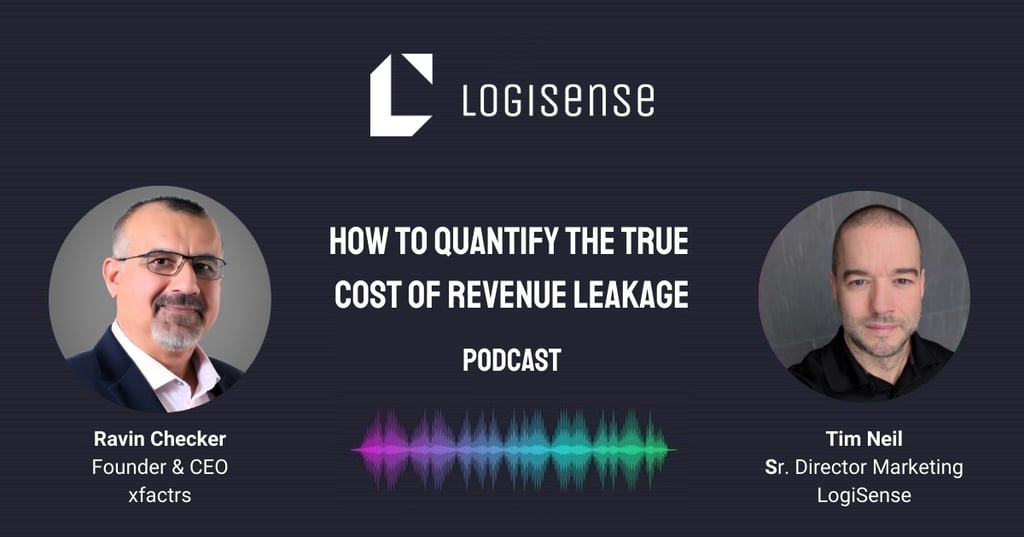
For deeper insights, listen to the full discussion with Ravin Checker, Founder & CEO of xfactrs, on our latest podcast: “How to Quantify the True Cost of Revenue Leakage.”

Continue learning
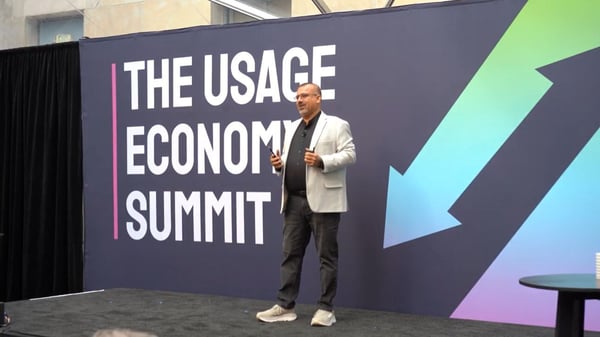
Uncovering revenue leakage in the usage economy
Find out where revenue is leaking and what it's costing you
LogiSense Blog
Latest articles
Selecting a real-time usage rating platform requires more than comparing feature lists.
Product teams are under constant pressure to ship faster, add new capabilities, respond to customer demand, and increasingly, embed AI into their...
Every discussion about AI eventually arrives at the same question:
Usage-based pricing is giving SaaS companies more flexibility in how they package and sell their products. Instead of charging every customer the...
For years, network growth was relatively predictable.