

Economic, Environmental, and Tech Forces Shaping the Usage Economy
In today’s fast-changing marketplace, the Usage Economy is being shaped by a blend of economic, environmental, and technological forces. These interconnected elements are transforming business operations and consumer interactions with products and services. For companies aiming to succeed in this dynamic landscape, understanding these forces is essential.
Forces Shaping the Usage Economy
Economic Drivers
From Perpetual Growth to Sustainable Models
The traditional focus on perpetual growth is giving way to more sustainable business models that emphasize lifetime value and customer retention. As companies hit the empirical limits of their markets, they are shifting strategies to maintain profitability. This shift is evident in various industries where businesses prioritize customer loyalty and long-term value over immediate gains.
Economic Incentives Reshaping Industries
Economic incentives play a pivotal role in transforming industries. A notable example is the pharmaceutical industry, where exorbitant pricing strategies have faced backlash. Eli Lilly’s insulin pricing controversy highlights the power of economic incentives. Competitors offering fair pricing forced Eli Lilly to reduce its prices, underscoring how transparent and reasonable pricing structures can disrupt established market dynamics.
Environmental Drivers
Impact of Climate Change and Resource Scarcity
Climate change and resource scarcity are pressing challenges that significantly impact business models. Rising temperatures, melting ice caps, and extreme weather events are forcing companies to rethink their operations. Businesses that ignore these environmental factors risk not only regulatory penalties but also consumer backlash and financial instability.
Promoting Sustainable Practices through Usage-Based Models
Usage-based models inherently promote sustainability by optimizing resource utilization. For example, car-sharing services like Zipcar and Turo reduce the need for individual car ownership, leading to fewer vehicles on the road and lower emissions. Similarly, renewable energy initiatives allow consumers to generate and sell back energy, fostering a more efficient and sustainable economic model.
Technological Drivers
Advancements in AI, IoT, and Cloud Computing
Technological advancements, particularly in AI, the IoT, and cloud computing, are accelerating the adoption of usage-based models. These technologies enable businesses to collect and analyze vast amounts of data, providing insights into consumer behavior and operational efficiencies. AI, in particular, offers transformative potential by automating complex processes and enhancing decision-making capabilities.
Potential and Risks of AI
While AI presents numerous opportunities, it also carries significant risks. Issues related to data privacy, security, and ethical use are paramount. Companies must navigate these challenges carefully to leverage AI’s benefits without compromising consumer trust or regulatory compliance. The balance between innovation and caution is critical in deploying AI-driven solutions effectively.
Conclusion
The interplay of economic, environmental, and technological forces is reshaping the Usage Economy. Businesses must recognize and adapt to these interconnected drivers to remain competitive. By embracing sustainable practices, leveraging technological advancements, and aligning with evolving economic incentives, companies can position themselves for long-term success in the usage-based economic landscape. Innovating and adapting to these forces is not just beneficial but essential for future growth and sustainability.
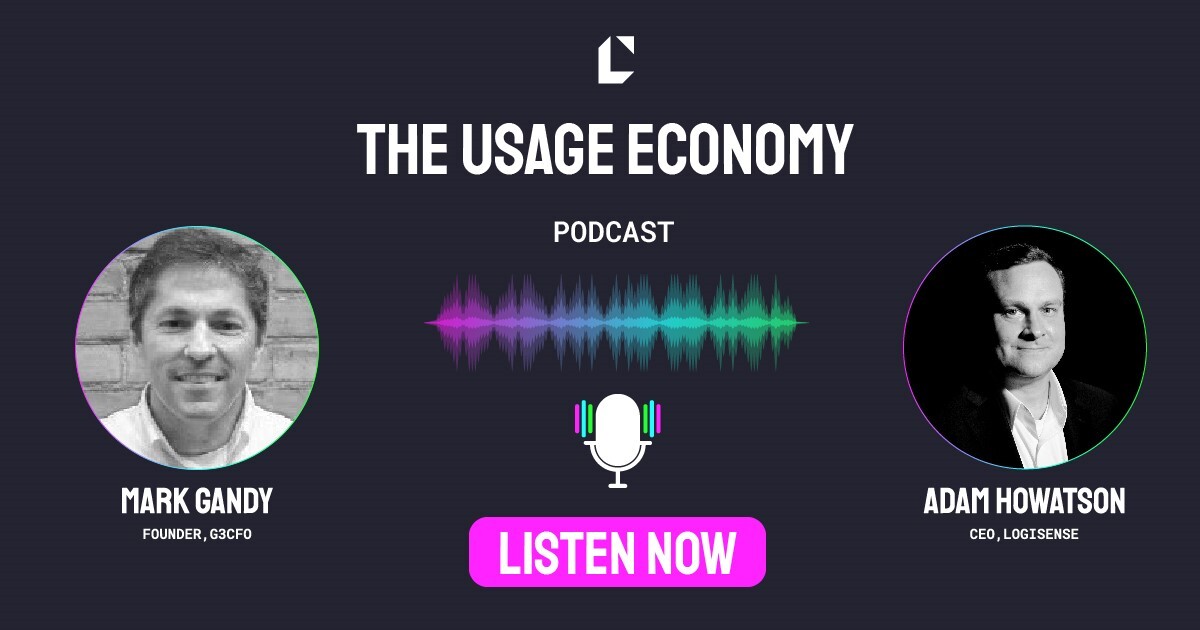
CFO Bookshelf's Mark Gandy hosts Adam Howatson, CEO - LogiSense
Consumers and business students know the subscription economy, but what about the Usage Economy? How does it differ, and why does it matter? Watch the podcast to learn more.

Continue learning

Rethinking AI Pricing
Turn AI Innovation into revenue
LogiSense Blog
Latest articles
Selecting a real-time usage rating platform requires more than comparing feature lists.
Product teams are under constant pressure to ship faster, add new capabilities, respond to customer demand, and increasingly, embed AI into their...
Every discussion about AI eventually arrives at the same question:
Usage-based pricing is giving SaaS companies more flexibility in how they package and sell their products. Instead of charging every customer the...
For years, network growth was relatively predictable.