
Operators should measure more than token consumption or model fees. The total cost of an AI agent may include model calls, infrastructure, API activity, data retrieval, workflow orchestration, monitoring, compliance controls, human intervention, and any financial adjustments it initiates. These costs should be associated with a measurable unit, such as each interaction, completed task, subscriber, workflow, or business outcome.

The Agentic AI Cost Problem in Telco
Agentic AI is being positioned as the next major efficiency lever for telecom operators. Autonomous agents that can troubleshoot network issues, optimize routing, resolve billing disputes, upsell intelligently, or even orchestrate service provisioning promise a step change in operational productivity.
But there is a structural issue emerging beneath the hype.
Agentic AI is not simply another software license. It is not even comparable to traditional automation. It behaves more like a digital workforce that continuously consumes compute, calls models, interacts with multiple systems, and triggers cascading workflows. For telecom operators operating on already compressed margins, this introduces a new and potentially underestimated cost layer.
In telco, where cost discipline is survival, that matters.
Why Agentic AI Is Fundamentally Different for Telecom
Traditional AI deployments in telecom have typically been narrow:
Fraud detection models
- Churn prediction algorithms
- Traffic optimization engines
- Static chatbots
Agentic AI changes the equation. These systems:
- Plan multi-step actions
- Interact across OSS, BSS, CRM, provisioning, billing, and network systems
- Make iterative LLM calls to reason, validate, and execute
- Trigger real downstream financial events
In a telecom environment, this means an agent could:
- Analyze a billing dispute
- Retrieve usage records
- Check contract terms
- Calculate credits
- Initiate adjustments
- Log compliance documentation
- Communicate resolution
Each of these steps may involve multiple model calls, database queries, API interactions, and logging events. Multiply that by millions of subscribers, and you no longer have a tool. You have a cost engine.
The Real Cost Drivers for Telcos
1. Token Explosion at Scale
Telecom operators do not operate at startup scale. They operate at national or global scale.
If an agentic AI handles:
- 500,000 support interactions per month
- 5 to 15 reasoning cycles per interaction
- Multiple contextual lookups per cycle
Token usage can escalate rapidly.
Unlike a static chatbot with limited branching, an agent makes recursive calls. In a high-volume environment like prepaid top-ups, roaming queries, IoT provisioning, or wholesale billing disputes, costs can grow non-linearly.
If pricing models remain opaque, operators risk margin erosion at scale.
2. Infrastructure and Orchestration Costs
Agentic systems require:
- GPU-backed inference capacity
- Vector databases
- Observability pipelines
- Logging and tracing
- Workflow orchestration layers
- Failover and fallback mechanisms
Telecom infrastructure is already complex. Integrating agentic AI into legacy BSS and OSS stacks adds engineering overhead and maintenance layers.
Unlike consumer SaaS companies, telcos often operate hybrid infrastructure environments with regulatory constraints, regional data residency requirements, and strict audit controls. That adds cost and friction.
3. Compliance and Regulatory Exposure
Telecom is one of the most regulated industries in the world.
Agentic AI making billing adjustments, provisioning changes, or promotional offers introduces:
- Regulatory risk
- Audit complexity
- Dispute management exposure
- Revenue assurance concerns
An incorrect automated credit issued at scale is not a minor bug. It is a financial liability.
The true TCO must include compliance validation, audit trails, explainability layers, and human oversight frameworks. These are rarely factored into initial AI budgets.
4. Revenue Assurance and Margin Impact
Telecom operators already struggle with:
- Revenue leakage
- Rating inconsistencies
- Discounting complexity
- Partner settlement errors
Agentic AI interacting with billing systems without structured guardrails can introduce new leakage vectors.
For example:
- Misinterpreted contract tiers
- Incorrect roaming classifications
- Usage misalignment in IoT state-based plans
- Wholesale rating inconsistencies
If monetization logic is not tightly controlled, AI automation can unintentionally amplify existing complexity rather than reduce it.
The Hidden Risk: AI Usage Growing Faster Than Revenue
One of the most concerning dynamics in telecom is this:
Network usage often grows faster than ARPU.
The same risk applies to AI.
If:
- AI interaction volume scales rapidly
- Agents are deployed across multiple channels
- Internal teams use agents heavily
But monetization and cost tracking are not aligned, operators could face a scenario where:
- AI consumption scales
- Infrastructure spend rises
- Margin remains flat
This is not hypothetical. Telecom history already provides a lesson.
Unlimited data plans destroyed per-GB pricing discipline. AI could repeat the same pattern if cost per interaction is not tightly measured and aligned to value.
What Telecom Leaders Should Do Now
1. Treat Agentic AI as a Monetized Resource
Every AI interaction has a cost. That cost must be:
- Measured
- Allocated
- Controlled
- Forecasted
Operators should build cost-per-interaction dashboards from day one.
2. Align AI Costs with Revenue Models
If AI agents:
- Drive upsell
- Reduce churn
- Improve ARPU
- Accelerate provisioning
Then ROI must be tied to revenue lift, not just automation savings.
Without revenue alignment, AI becomes an expense center rather than a growth engine.
3. Architect for Guardrails First, Autonomy Second
In telecom, financial logic cannot be probabilistic.
Agentic systems should:
- Call deterministic rating engines
- Respect contract enforcement rules
- Validate before executing monetary actions
- Log every financial decision
Autonomy without monetization governance is operational risk.
4. Build Monetization Infrastructure That Can Support AI
As AI introduces new billing dimensions, operators will need systems that can handle:
- Usage-based AI pricing
- Token-based consumption tracking
- Hybrid subscription plus AI event models
- State-based IoT billing triggered by AI decisions
- Near real-time rating for AI-driven interactions
Legacy flat monthly billing platforms will not support this complexity.
AI is not just a technology upgrade. It is a monetization transformation event.
The Strategic Question for Telcos
Agentic AI is not a distant concept for telecom operators. Its adoption is inevitable. The real issue is not whether it will be deployed, but whether it will be governed with financial discipline.
Operators must decide if they will properly instrument it, actively manage its cost curve, align it to monetization outcomes, and protect already pressured margins.
Telecom has lived through multiple waves of margin compression. Unlimited pricing models diluted revenue predictability. OTT players reshaped value capture. 5G required heavy infrastructure investment before returns fully materialized. Each wave demonstrated the same principle: scale without monetization control erodes profitability.
Agentic AI presents a similar fork in the road. It can become a margin amplifier, driving operational efficiency, accelerating service innovation, and enabling intelligent, usage-aligned monetization. Or it can evolve into an uncontrolled cost layer, where AI consumption grows faster than revenue and quietly compresses margins.
The differentiator will not be the sophistication of the model. It will be monetization discipline.
If telecom leaders apply the same rigor they use for network economics, rating precision, and revenue assurance, agentic AI can become a strategic advantage. If it is treated as another automation layer without financial guardrails, it risks becoming the next invisible expense that scales with volume.
In telecom, scale magnifies everything. That includes AI cost.
AI Pricing Lessons from Telco
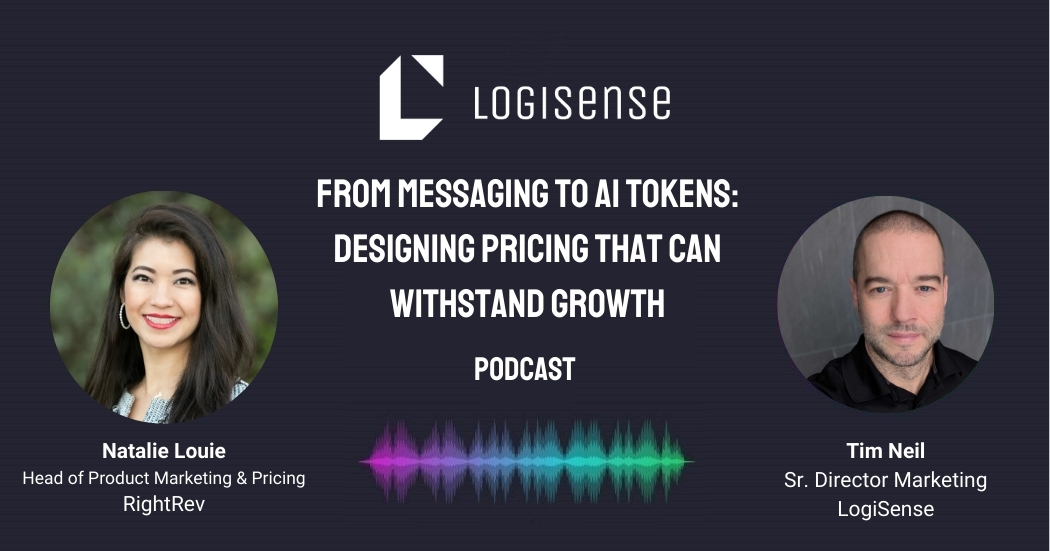
Natalie Louie, Head of Product Marketing & Pricing at RightRev, joins Tim Neil to unpack what telecom learned the hard way about usage based pricing and why those lessons matter now for AI, SaaS, and infrastructure driven businesses.
Drawing on decades of experience in SMS, voice, and carrier pricing, Natalie explains why unlimited plans, opaque costs, and discount driven sales motions quietly destroy margins as usage scales. Watch the podcast now.
Frequently Asked Questions
How can telecom operators measure the true cost of an AI agent?
Which agentic AI activities should telecom operators meter?
Operators should meter any activity that creates a meaningful cost, consumes a limited resource, or triggers a financial event. This may include tokens, model calls, API requests, compute time, data retrieval, workflow executions, network events, completed resolutions, provisioning actions, credits, and billing adjustments. The appropriate metric will depend on the use case and how closely the activity can be connected to customer or business value.
Can existing telecom billing systems support agentic AI usage?
Some existing platforms may capture basic usage events, but agentic AI can introduce higher event volumes, new units of measure, multi-step workflows, and more complex pricing relationships. Operators should evaluate whether their systems can ingest detailed AI usage data, rate events in near real time, support hybrid and usage-based models, apply contract-specific rules, and maintain a traceable record of financial decisions.
How can CSPs prevent agentic AI from creating revenue leakage?
CSPs should separate probabilistic AI decision-making from deterministic financial execution. An AI agent may recommend an action, but credits, discounts, charges, and contract changes should be validated against established rating, entitlement, and approval rules before they are applied. Detailed event records, exception handling, usage reconciliation, and audit trails can help identify errors before they affect customers or revenue.

Ali Naqvi is a Product Marketing Manager at LogiSense, where he focuses on monetization strategy, usage-based business models, and the evolving economics of SaaS, telecom, and AI-driven services. With over a decade of experience in B2B marketing and demand generation, Ali writes about the intersection of pricing innovation, quote-to-cash transformation, and monetization infrastructure. His work explores how organizations can adapt their commercial operations to support hybrid pricing models, AI consumption, and the growing complexity of modern digital services.
Continue learning

Analyst Report
The Monetization Challenges Behind AI Growth
Agentic AI can generate millions of billable events, but revenue only follows when pricing, billing, and financial systems can keep pace. Discover how industry leaders are preparing their monetization infrastructure for the next wave of AI-driven consumption.

Talk to an Expert
Is Your Billing Platform Ready for Agentic AI?
Agentic AI can generate millions of billable events, but revenue only follows when pricing, billing, and financial systems can keep pace. Discover how industry leaders are preparing their monetization infrastructure for the next wave of AI-driven consumption.
LogiSense Blog
The LogiSense blog explores advanced billing solutions, focusing on usage-based pricing, monetization strategies, revenue assurance, and SaaS innovations to help businesses optimize billing processes and adapt to the evolving usage economy.
Latest articles
How to Evaluate a Real-Time Usage Rating Platform
Selecting a real-time usage rating platform requires more than comparing feature lists.
Pricing Should Not Be the Last Step in Product Development
Product teams are under constant pressure to ship faster, add new capabilities, respond to customer demand, and increasingly, embed AI into their...
AI Monetization Starts Where Pricing Strategy Ends
Every discussion about AI eventually arrives at the same question:
Real-Time Usage Rating: A Guide for SaaS Finance Teams
Usage-based pricing is giving SaaS companies more flexibility in how they package and sell their products. Instead of charging every customer the...
AI Agents Are Rewriting Network Economics
For years, network growth was relatively predictable.