
There is no single pricing model for GPUaaS. Many providers combine subscription fees with usage-based charges, allowing customers to pay for the compute resources they actually consume. Pricing may also vary based on GPU type, reserved capacity, processing time, or service-level agreements (SLAs). The right model depends on customer needs and the services being delivered.

GPUaaS Is Reshaping Telecom Monetization
Telecom operators see what is happening in AI infrastructure right now, and many do not want to be reduced to bandwidth providers while hyperscalers capture the majority of the value.
That is why operators across Europe and Asia-Pacific are investing in AI-ready data centers, edge compute capacity, and GPU infrastructure. The opportunity is bigger than connectivity. AI workloads create demand for local compute, low-latency inferencing, sovereign infrastructure, and regional processing capacity. Those are areas where some telecom providers believe they can compete.
The infrastructure conversation is getting most of the attention. The monetization conversation is not.
That may become the harder problem.
AI Infrastructure Changes the Telecom Value Proposition
GPU-as-a-Service sounds straightforward on paper. Enterprises need compute capacity. Telecom operators deploy GPUs and rent access to them.
The reality is messier.
AI workloads behave very differently from traditional telecom services. Demand fluctuates constantly. Infrastructure consumption spikes unexpectedly. Inferencing workloads may run across multiple regions, edge locations, and cloud environments simultaneously. Customers may want guaranteed performance during some workloads and low-cost burst capacity during others.
That creates a commercial environment that looks far closer to cloud consumption economics than traditional telecom billing.
The operators moving into GPUaaS are not simply adding another product SKU. They are entering a completely different operational model.
Sovereign AI Is Creating Regional Opportunities
The sovereign AI conversation is becoming increasingly important, particularly across Europe and parts of Asia-Pacific.
Many enterprises and public sector organizations do not want sensitive data, AI processing, or model activity handled entirely outside their jurisdiction. Concerns around regulation, compliance, governance, and operational control are pushing organizations toward regional AI infrastructure providers.
Telecom operators already have several advantages here:
- local infrastructure,
- existing enterprise relationships,
- operational presence,
- and experience managing critical infrastructure environments.
That does not automatically guarantee success. Competing against hyperscalers on scale alone is unrealistic.
But telecom operators do not necessarily need to win the global infrastructure race to build meaningful AI businesses. In many markets, regional proximity, low-latency performance, and trusted infrastructure matter more than sheer size.
That creates room for telecom providers to move higher into the AI value chain.
AI Inferencing Creates a Different Infrastructure Economy
Much of the early AI investment cycle focused on model training. Training workloads are enormous, centralized, and heavily dependent on hyperscale environments.
Inferencing changes the equation.
As AI capabilities become embedded inside enterprise applications, customer platforms, collaboration tools, automation systems, and operational workflows, latency starts to matter much more. Enterprises increasingly want AI responses delivered close to users, devices, and operational systems.
That pushes compute outward toward:
- edge environments,
- regional infrastructure,
- distributed data centers,
- and telecom-adjacent facilities.
Inferencing also creates highly variable consumption patterns. A customer may use relatively little compute one week and dramatically increase usage the next depending on application activity, customer demand, or AI adoption rates internally.
Traditional telecom pricing models were not built for that level of volatility.
GPUaaS Introduces a New Billing Problem
This is where many telecom operators may underestimate the complexity ahead.
Selling AI compute is not the same as selling connectivity circuits or recurring subscriptions. GPUaaS introduces layers of pricing and operational complexity that many existing quote-to-cash environments were never designed to handle.
Operators may need to support combinations of:
- GPU utilization billing,
- burst compute pricing,
- token-based AI consumption,
- edge inferencing charges,
- usage commitments,
- reserved capacity models,
- API monetization,
- hybrid recurring and consumption pricing,
- and customer-specific commercial agreements.
Even defining what should be billed becomes more complicated.
Should pricing be based on:
- compute time,
- GPU allocation,
- inference requests,
- throughput,
- storage,
- token usage,
- or application outcomes?
In many cases, the answer may be all of the above.
That places significant pressure on mediation systems, rating engines, invoicing logic, and revenue operations workflows.
Without modern monetization infrastructure, operators risk creating AI businesses that are technically impressive but commercially difficult to scale.
AI Infrastructure Revenue Depends on Monetization Flexibility
A major reason hyperscalers have been successful in cloud infrastructure is not simply technical scale. It is commercial flexibility.
Customers can:
- scale consumption up or down,
- experiment without large upfront commitments,
- monitor usage in near real time,
- and align infrastructure costs more closely to business activity.
Enterprise buyers increasingly expect similar flexibility from AI infrastructure providers.
That naturally pushes telecom operators toward:
- usage-based billing,
- hybrid pricing models,
- dynamic commercial agreements,
- and real-time visibility into infrastructure consumption.
Rigid telecom billing structures become difficult to sustain in AI compute environments where workloads constantly evolve.
This is not just a technology transition. It is a business model transition.
Telecom Operators Are Moving Into Consumption Economics
The telecom industry has spent years trying to move beyond the limitations of commodity connectivity. AI infrastructure may finally provide a credible path forward.
But deploying GPUs alone will not solve the revenue problem.
Operators entering the AI infrastructure market are also entering the Usage Economy. Success will depend on whether they can commercialize dynamic AI services efficiently, transparently, and at scale.
That requires monetization systems capable of supporting:
- real-time usage mediation,
- flexible pricing logic,
- AI-native quote-to-cash workflows,
- customer-specific contracts,
- and scalable consumption billing.
The infrastructure race matters.
The monetization race may matter even more.
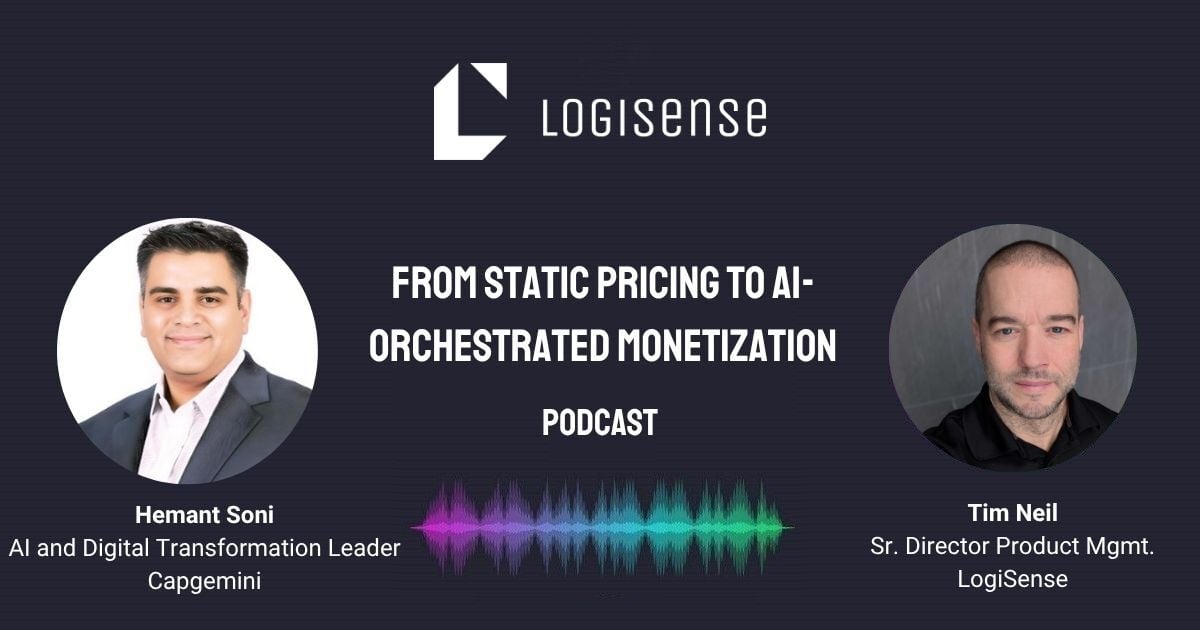
From Static Pricing to AI Orchestrated Monetization
Discover how AI is transforming pricing, bundling, and customer experiences into real-time, dynamic revenue engines.
In this episode, Hemant Soni, AI & Digital Transformation Leader at Capgemini, explains why static pricing can no longer keep up and what is replacing it.
Frequently Asked Questions
How should GPU-as-a-Service (GPUaaS) be priced?
Can traditional telecom billing systems support GPUaaS?
Many legacy billing platforms were designed for recurring connectivity services and may struggle to support highly dynamic AI workloads. GPUaaS often requires real-time usage metering, flexible pricing rules, hybrid billing models, and the ability to rate multiple consumption metrics accurately and at scale.
What usage data should telecom operators meter for AI infrastructure services?
The answer depends on the service offering, but operators may need to meter GPU utilization, compute time, inference requests, API consumption, storage, network usage, and edge processing activity. Accurate metering provides the foundation for transparent billing and reliable revenue recognition.
Why is usage-based billing a good fit for AI infrastructure?
AI workloads are rarely predictable. Customers may require additional compute capacity during periods of high demand and significantly less at other times. Usage-based billing allows costs to align more closely with actual consumption, giving customers greater flexibility while enabling providers to monetize AI infrastructure more effectively.
How can telecom operators compete with hyperscalers in AI infrastructure?
Many telecom operators are focusing on areas where they have natural advantages rather than competing purely on scale. Regional data centers, edge infrastructure, low-latency connectivity, trusted enterprise relationships, and support for sovereign AI initiatives can all help operators deliver differentiated AI services.
What capabilities should an AI monetization platform provide?
An AI monetization platform should support flexible pricing models, real-time usage metering, scalable rating, hybrid recurring and consumption billing, customer-specific pricing, revenue assurance, and detailed visibility into infrastructure consumption. These capabilities help operators commercialize AI services while maintaining billing accuracy as workloads become more dynamic.

Ali Naqvi is a Product Marketing Manager at LogiSense, where he focuses on monetization strategy, usage-based business models, and the evolving economics of SaaS, telecom, and AI-driven services. With over a decade of experience in B2B marketing and demand generation, Ali writes about the intersection of pricing innovation, quote-to-cash transformation, and monetization infrastructure. His work explores how organizations can adapt their commercial operations to support hybrid pricing models, AI consumption, and the growing complexity of modern digital services.
Continue learning
Case study
Cisco Replaces Zuora With LogiSense
Cisco desired greater autonomy for go-to-market and product changes as well as better automation and consolidation of invoicing systems.

Speak with an Expert
Ready to Monetize AI Infrastructure?
Speak with a LogiSense expert to assess whether your pricing, billing, and monetization systems are ready to support AI-driven business models.
LogiSense Blog
The LogiSense blog explores advanced billing solutions, focusing on usage-based pricing, monetization strategies, revenue assurance, and SaaS innovations to help businesses optimize billing processes and adapt to the evolving usage economy.
Latest articles
Enterprise Usage Billing: Beyond Metering and Rating
Usage-based billing used to be a differentiator.
How to Evaluate a Real-Time Usage Rating Platform
Selecting a real-time usage rating platform requires more than comparing feature lists.
Pricing Should Not Be the Last Step in Product Development
Product teams are under constant pressure to ship faster, add new capabilities, respond to customer demand, and increasingly, embed AI into their...
AI Monetization Starts Where Pricing Strategy Ends
Every discussion about AI eventually arrives at the same question:
Real-Time Usage Rating: A Guide for SaaS Finance Teams
Usage-based pricing is giving SaaS companies more flexibility in how they package and sell their products. Instead of charging every customer the...