
The right model depends on how customers experience value, how accurately usage or outcomes can be measured, and how much cost variability the provider must manage. Token-based pricing may suit infrastructure services, while usage-based, hybrid, or outcome-based models may be more appropriate when customers associate value with completed work or measurable business results.

The AI Pricing Shift
Artificial intelligence is forcing software companies to rethink nearly every aspect of their business. Product development cycles are accelerating, cost structures are changing, and traditional SaaS pricing models are being challenged.
One company at the center of this transformation is Fin, the AI customer service platform formerly known as Intercom.
In a recent episode of the LogiSense podcast, Tim Neil sat down with Nakul Sharma, Pricing Product Manager at Fin, to discuss how the company approached one of the most difficult questions facing AI businesses today:
How do you price AI in a way that aligns cost, value, and customer trust?
From Seats to Outcomes
For many years, SaaS companies relied heavily on seat-based pricing. The model was simple, predictable, and easy for customers to understand.
AI changes that equation.
As AI agents become capable of handling work traditionally performed by humans, charging per seat becomes increasingly disconnected from the value being delivered. If AI can resolve customer issues without human intervention, why should customers continue paying based on the number of support agents they employ?
Fin's answer was to move toward an outcome-based pricing model.
Rather than charging customers for conversations or AI interactions, Fin charges only when a customer issue is successfully resolved. This creates a direct connection between the value delivered and the price paid.
The Challenge of Defining an Outcome
While outcome-based pricing sounds simple in theory, implementing it is far more complex.
-
How do you determine whether an AI interaction actually solved a customer's problem?
-
How do customers verify those outcomes?
-
How do you create trust in a model where pricing is tied to performance?
During the discussion, Nakul shares how Fin approaches these questions through transparent reporting, customer auditability, and clear definitions of successful resolutions.
These operational details are often overlooked when discussing AI pricing, but they are critical to making outcome-based models work at scale.
Balancing Predictability and Fairness
One of the biggest concerns surrounding usage-based and outcome-based pricing is budget predictability.
Finance teams need confidence in future spend. At the same time, customers don't want to commit to usage levels they cannot accurately forecast months in advance.
The podcast explores how Fin balances these competing priorities through annual drawdowns, rollover allowances, flexible overage structures, and contract mechanisms that help customers adapt as AI adoption grows.
For organizations considering usage-based or outcome-based pricing models, these lessons are particularly valuable.
Why Token-Based Pricing May Not Be the Future
Many AI providers today price based on tokens, model consumption, or infrastructure costs.
Nakul offers a different perspective.
While token-based pricing may make sense at the foundation model layer, he believes business buyers ultimately want pricing tied to business value, not technical consumption metrics.
As AI matures and infrastructure costs continue to evolve, outcome-based and value-based pricing models may become increasingly attractive for enterprise software providers seeking stronger alignment with customer success.
Listen to the Full Conversation
The transition from SaaS pricing to AI monetization is creating new challenges for product leaders, finance teams, and pricing professionals.
In this episode, Nakul Sharma shares practical lessons from Fin's journey, including:
- Why seat-based pricing no longer fits many AI products
- How outcome-based pricing was designed and implemented
- Managing predictability and fairness in AI monetization
- The impact of AI costs on pricing strategy
- Why token-based pricing may not survive at the application layer
- Where AI pricing models are headed next
Listen to the full podcast to hear the complete discussion and gain firsthand insights from one of the leaders shaping the future of AI pricing.
.jpg?width=1200&height=630&name=How%20Fin%20Reimagined%20AI%20Pricing%20(1).jpg)
Frequently Asked Questions
How do you choose the right pricing model for an AI product?
What capabilities are needed to operationalize outcome-based AI pricing?
Companies need systems that can capture product activity, determine when a billable outcome has occurred, apply customer-specific pricing rules, and produce transparent billing records. They must also be able to manage contracts, commitments, allowances, overages, adjustments, disputes, and reporting without relying on extensive manual processes.
Can AI companies combine subscription, usage, and outcome-based pricing?
Yes. A hybrid model can combine a recurring platform fee with usage charges, outcome-based fees, included allowances, or committed spend. This can provide the vendor with a more predictable revenue foundation while allowing customers to pay in proportion to adoption or value received.
How can companies test a new AI pricing model before a full rollout?
Companies can begin with a limited customer segment, product tier, or use case. During the pilot, they should evaluate customer understanding, revenue predictability, gross margin, billing accuracy, dispute rates, and whether the selected pricing metric reflects the value customers believe they receive.
What are the risks of moving to outcome-based AI pricing?
The main risks include ambiguous outcome definitions, inconsistent measurement, revenue volatility, customer disputes, and misalignment between the price charged and the cost of delivering the service. Clear contractual definitions, auditable usage data, pricing safeguards, and flexible monetization infrastructure can help reduce these risks.

Ali Naqvi is a Product Marketing Manager at LogiSense, where he focuses on monetization strategy, usage-based business models, and the evolving economics of SaaS, telecom, and AI-driven services. With over a decade of experience in B2B marketing and demand generation, Ali writes about the intersection of pricing innovation, quote-to-cash transformation, and monetization infrastructure. His work explores how organizations can adapt their commercial operations to support hybrid pricing models, AI consumption, and the growing complexity of modern digital services.
Continue learning
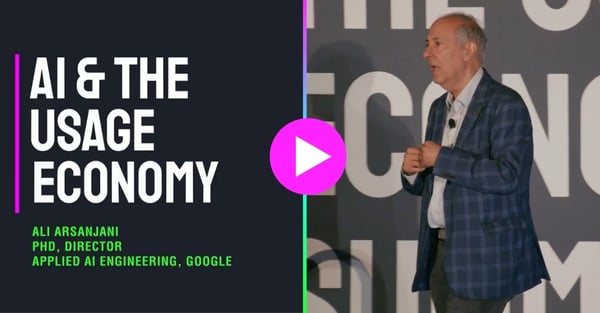
Usage Economy Summit
Pricing the Intelligent Future
This session provides strategic insights for product, pricing, finance, and technology leaders looking to understand how AI will influence revenue models, customer relationships, and competitive advantage in the years ahead.

Speak with an Expert
Let's discuss your pricing strategy and monetization roadmap
Speak with a LogiSense expert to assess your monetization strategy, identify operational risks, and explore how leading organizations are aligning pricing, billing, and revenue operations to support AI-driven business models.
LogiSense Blog
The LogiSense blog explores advanced billing solutions, focusing on usage-based pricing, monetization strategies, revenue assurance, and SaaS innovations to help businesses optimize billing processes and adapt to the evolving usage economy.
Latest articles
How to Evaluate a Real-Time Usage Rating Platform
Selecting a real-time usage rating platform requires more than comparing feature lists.
Pricing Should Not Be the Last Step in Product Development
Product teams are under constant pressure to ship faster, add new capabilities, respond to customer demand, and increasingly, embed AI into their...
AI Monetization Starts Where Pricing Strategy Ends
Every discussion about AI eventually arrives at the same question:
Real-Time Usage Rating: A Guide for SaaS Finance Teams
Usage-based pricing is giving SaaS companies more flexibility in how they package and sell their products. Instead of charging every customer the...
AI Agents Are Rewriting Network Economics
For years, network growth was relatively predictable.